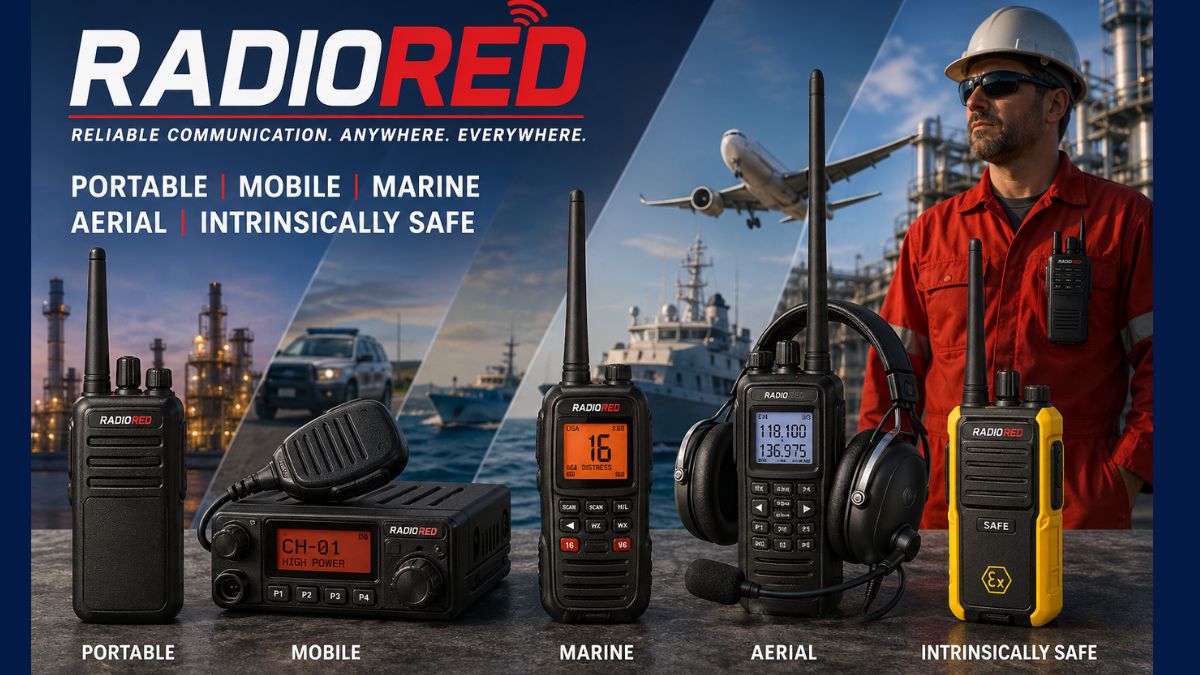
In a world where communication can make the difference between safety and risk, efficiency and delay, reliable radio systems remain essential. RadioRed has emerged as a trusted name in delivering advanced radio communication solutions designed for diverse environments. From rugged industrial sites to open seas and high-altitude operations, RadioRed focuses on providing dependable, high-performance radios tailored to real-world challenges. This article explores how RadioRed supports portable, mobile, marine, aerial, and intrinsically safe communication needs while maintaining clarity, durability, and innovation.
What Is RadioRed and Why It Matters
RadioRed represents a modern approach to professional radio communication systems, offering specialized solutions for industries that demand constant connectivity. It combines durability with advanced features, ensuring users can communicate clearly even in harsh or remote conditions. Unlike consumer-grade radios, RadioRed systems are built for professionals who rely on uninterrupted signals.
The importance of RadioRed lies in its versatility, as it supports multiple sectors such as logistics, maritime, aviation, and hazardous industries. These radios are engineered with precision to handle interference, weather exposure, and operational stress. By integrating cutting-edge technology, RadioRed enhances both safety and productivity.
Organizations choose RadioRed because it ensures consistent communication where traditional networks fail. Whether in emergencies or routine operations, reliable communication tools are essential. This is where RadioRed stands out as a dependable partner.
Portable Radios: Compact Communication Power
Portable radios are at the core of RadioRed’s offerings, designed for flexibility and ease of use. These handheld devices are ideal for professionals who need mobility without sacrificing communication quality. Security teams, event organizers, and field workers often rely on these radios for instant communication.
RadioRed portable radios are built with strong battery life, ensuring long operational hours without frequent recharging. They also feature ergonomic designs that make them comfortable to carry during extended shifts. Their durability allows them to withstand drops, dust, and water exposure.
Advanced features such as noise cancellation and clear audio output improve communication clarity. This is especially important in noisy environments like construction sites or crowded events. Portable radios from RadioRed ensure users stay connected anytime, anywhere.
Their simplicity and reliability make them a preferred choice for both small teams and large organizations. With easy channel switching and user-friendly controls, these radios are accessible to everyone.
Mobile Radios: Reliable Communication on the Move
Mobile radios are essential for vehicles and transportation systems, and RadioRed provides robust solutions in this category. These radios are typically installed in cars, trucks, and emergency vehicles, offering strong signal coverage over long distances.
RadioRed mobile radios are designed with powerful transmitters, ensuring clear communication even in remote areas. This makes them ideal for logistics companies, emergency services, and public safety organizations. Their ability to connect seamlessly with base stations enhances coordination.
The durability of these radios ensures they perform well under vibration, temperature changes, and continuous use. Drivers and operators can rely on them for real-time updates and instructions. This improves efficiency and reduces operational delays.
Mobile radios also support advanced features such as GPS integration and digital communication modes. These features enhance tracking and coordination, making RadioRed a reliable solution for modern transportation needs.
Marine Radios: Staying Connected at Sea
Communication at sea presents unique challenges, and RadioRed marine radios are built to handle them effectively. These radios are designed for ships, boats, and offshore operations, ensuring reliable communication even in unpredictable conditions.
RadioRed marine radios are water-resistant and corrosion-proof, making them suitable for harsh marine environments. Their strong signal range allows communication between vessels and coastal stations. This is crucial for navigation safety and emergency response.
Clear audio quality is essential in marine communication, especially during rough weather. RadioRed ensures minimal distortion, allowing users to hear messages accurately. This reduces the risk of misunderstandings that could lead to accidents.
Additionally, these radios often include emergency features such as distress signals and weather alerts. These capabilities enhance safety for sailors, fishermen, and maritime professionals. RadioRed continues to support the maritime industry with dependable communication tools.
Aerial Radios: Communication in the Sky
Aerial communication requires precision and reliability, and RadioRed aerial radios meet these demands. Designed for aviation use, these radios provide clear communication between pilots, air traffic control, and ground teams.
RadioRed aerial radios are built to minimize interference and ensure stable signals at high altitudes. This is critical for maintaining safe and efficient flight operations. Their advanced technology supports both analog and digital communication systems.
Durability is another key feature, as these radios must perform under varying pressure and temperature conditions. RadioRed ensures that its aerial radios meet strict aviation standards. This guarantees consistent performance during flights.
These radios also offer intuitive controls, allowing pilots to focus on navigation while maintaining communication. By providing reliable airborne connectivity, RadioRed plays a vital role in aviation safety and coordination.
Intrinsically Safe Radios: Safety in Hazardous Environments
Intrinsically safe radios are designed for environments where flammable gases, dust, or chemicals are present. RadioRed excels in this category by offering radios that meet strict safety certifications. These devices prevent sparks or heat that could trigger explosions.
Industries such as oil and gas, mining, and chemical processing rely heavily on intrinsically safe radios. RadioRed ensures these devices are tested and certified for hazardous locations. This provides peace of mind for workers operating in high-risk areas.
Despite their safety-focused design, these radios do not compromise on performance. They deliver clear audio, long battery life, and durable construction. Workers can communicate effectively without worrying about safety hazards.
RadioRed’s commitment to safety innovation ensures that its intrinsically safe radios meet global standards. This makes them a trusted choice for industries where safety is non-negotiable.
Key Features That Set RadioRed Apart
RadioRed stands out due to its combination of advanced technology and practical design. Its radios are built with high-quality materials that ensure long-lasting performance. This durability reduces maintenance costs and increases reliability.
Another key feature is the integration of digital communication technology. This improves signal clarity and reduces interference, especially in crowded communication channels. Users benefit from clearer and more efficient communication.
RadioRed also focuses on user-friendly interfaces, making its radios easy to operate. Even new users can quickly learn how to use these devices. This reduces training time and improves productivity.
The brand’s commitment to innovation ensures continuous improvement in its products. By staying ahead of industry trends, RadioRed delivers solutions that meet evolving communication needs.
Applications Across Different Industries
RadioRed radios are widely used across various industries due to their versatility. In construction, they help teams coordinate tasks and ensure safety on-site. Reliable communication reduces delays and improves efficiency.
In transportation and logistics, RadioRed mobile radios enable real-time tracking and communication. This ensures smooth operations and timely deliveries. Drivers can stay connected with dispatch centers at all times.
Marine and aviation industries rely on RadioRed for safety and coordination. These sectors require precise communication to avoid risks and ensure smooth operations. RadioRed provides dependable solutions for these critical environments.
Hazardous industries benefit from intrinsically safe radios, ensuring worker safety while maintaining communication. RadioRed continues to support these industries with specialized solutions tailored to their needs.
Benefits of Choosing RadioRed Solutions
Choosing RadioRed means investing in reliability, safety, and efficiency. Its radios are designed to perform consistently, even in challenging conditions. This reliability ensures uninterrupted communication.
Another benefit is improved safety, especially in high-risk environments. RadioRed’s intrinsically safe radios protect workers while enabling effective communication. This reduces the risk of accidents and enhances overall safety.
Cost-effectiveness is also a major advantage. Durable radios require less maintenance and replacement, saving organizations money in the long run. RadioRed provides value through long-lasting performance.
Finally, the versatility of RadioRed solutions allows organizations to use them across multiple applications. This flexibility makes them a smart investment for businesses of all sizes.
Future of Radio Communication with RadioRed
The future of radio communication is evolving with digital transformation, and RadioRed is at the forefront of this change. The integration of smart technologies is enhancing communication efficiency and reliability.
RadioRed is focusing on improving connectivity through advanced digital systems and network integration. This ensures seamless communication across different platforms and devices. Users can expect more innovative features in the future.
The demand for reliable communication will continue to grow, especially in industries that operate in remote or hazardous environments. RadioRed is well-positioned to meet these demands with its advanced solutions.
By embracing innovation and maintaining high standards, RadioRed is shaping the future of professional communication systems.
Conclusion
RadioRed has established itself as a reliable provider of communication solutions for diverse environments. From portable radios to advanced intrinsically safe devices, it offers products that prioritize performance, safety, and durability. Its ability to adapt to different industries makes it a valuable partner for organizations worldwide.
Whether on land, sea, or in the air, RadioRed ensures clear and dependable communication. By combining innovation with practical design, it continues to meet the evolving needs of modern industries. For anyone seeking reliable communication tools, RadioRed remains a trusted choice.
FAQs
What is RadioRed used for?
RadioRed is used for professional communication across industries like construction, marine, aviation, and hazardous environments.
What makes RadioRed portable radios reliable?
They offer strong battery life, durable design, and clear audio, making them ideal for field communication.
Are RadioRed marine radios waterproof?
Yes, they are designed to be water-resistant and corrosion-proof for use in harsh marine conditions.
What are intrinsically safe radios?
These are radios designed for hazardous environments where flammable materials are present, preventing sparks or explosions.
Can RadioRed radios be used in aviation?
Yes, RadioRed provides aerial radios that meet aviation standards for clear and reliable communication.