Imagine a massive aircraft carrier made not of steel, but of ice. It sounds like something out of science fiction, yet during World War II, this idea was seriously explored. The concept of the “pykrete ship” was part of a bold military experiment aimed at solving a real problem—how to build unsinkable ships in a time of limited resources. This article dives into the origins, science, and ultimate fate of this extraordinary idea, revealing why it still captures imaginations today.
What Is a Pykrete Ship?
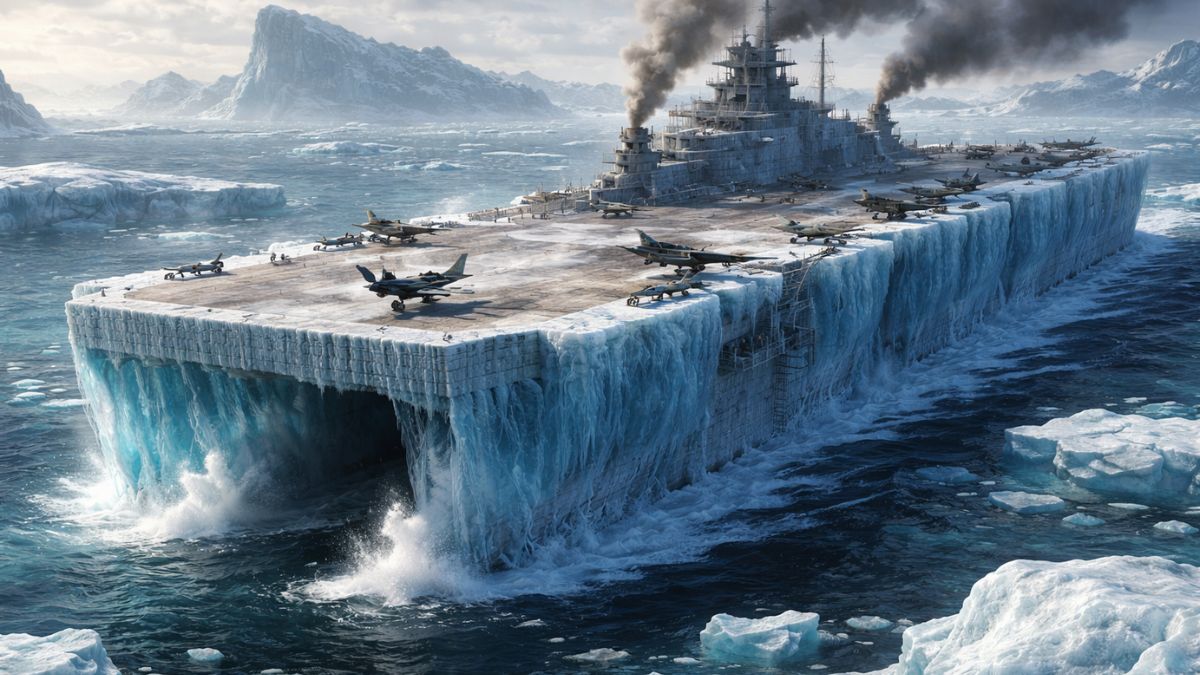
A pykrete ship refers to a proposed naval vessel constructed using a material called pykrete, a mixture of ice and wood pulp. Unlike ordinary ice, pykrete is incredibly strong, resistant to melting, and surprisingly durable. The concept emerged during World War II as a potential solution to the shortage of steel and shipbuilding materials.
The idea was to create large floating airbases that could support aircraft in the middle of the Atlantic Ocean. These ships would be almost unsinkable due to their massive size and unique material composition. The term “pykrete” itself comes from its inventor, Geoffrey Pyke, who played a key role in developing this innovative concept.
The Origins of the Pykrete Concept
The pykrete ship idea was born out of necessity during the height of World War II. At that time, German U-boats were dominating the Atlantic, sinking Allied ships and disrupting supply lines. Traditional aircraft carriers were expensive and time-consuming to build, making them difficult to deploy quickly.
Geoffrey Pyke proposed an unconventional solution—build aircraft carriers out of ice reinforced with wood pulp. His idea quickly gained attention from British leadership, including Winston Churchill, who was known for supporting innovative wartime projects. This led to the development of a secret plan known as Project Habakkuk.
The Science Behind Pykrete Material
Pykrete is not just frozen water; it is a composite material that combines approximately 86% ice and 14% wood pulp. This mixture creates a structure that is much stronger and more resilient than regular ice. The wood fibers act as reinforcement, preventing cracks from spreading and increasing overall durability.
One of the most remarkable properties of pykrete is its slow melting rate. Even in relatively warm conditions, it retains its shape far longer than ordinary ice. Additionally, it is resistant to bullets and explosions, making it an attractive option for military use. Tests showed that pykrete could withstand significant damage without breaking apart, which was crucial for a ship expected to face enemy attacks.
Project Habakkuk: The Ice Aircraft Carrier
The most ambitious application of pykrete was Project Habakkuk, a secret Allied initiative to build a full-scale ice aircraft carrier. The proposed vessel would have been enormous, measuring over 600 meters in length and capable of carrying dozens of aircraft.
The design included refrigeration systems to keep the structure frozen, even in warmer ocean waters. Engineers planned to install insulation layers and cooling pipes throughout the ship. Despite its icy construction, the ship would have featured runways, hangars, and defensive weaponry similar to traditional carriers.
A prototype was eventually built on a small scale in Canada to test the feasibility of the concept. The results were promising, proving that pykrete could indeed be used for large structures. However, scaling the project to full size presented significant challenges.
Why the Pykrete Ship Was Never Built
Despite its innovative design and successful testing, the pykrete ship was never completed. Several factors contributed to the abandonment of the project. First, the logistical challenges were immense, including the need for constant refrigeration and maintenance.
Second, advancements in conventional shipbuilding and aircraft technology reduced the urgency of the project. Long-range aircraft began to fill the gap that the pykrete carrier was meant to address. Additionally, the cost and complexity of constructing such a massive structure made it less practical compared to traditional solutions.
By the end of the war, the need for such an experimental vessel had diminished. As a result, Project Habakkuk was quietly shelved, leaving behind one of the most unusual ideas in military history.
Legacy and Modern Interest in Pykrete
Although the pykrete ship was never realized, its legacy lives on as a testament to human ingenuity. The project demonstrated how unconventional thinking can lead to groundbreaking innovations, even if they are not ultimately implemented.
Today, pykrete continues to be studied for its unique properties. Researchers have explored its potential use in sustainable construction and cold-region engineering. The story of the pykrete ship also remains a popular topic in history books and documentaries, highlighting the creativity and desperation of wartime innovation.
Lessons from the Pykrete Ship Concept
The pykrete ship offers valuable lessons about innovation, risk-taking, and adaptability. It shows how extreme circumstances can inspire bold ideas that challenge conventional thinking. Even though the project was never completed, it pushed the boundaries of engineering and material science.
This concept also illustrates the importance of timing in technological development. Sometimes, an idea may be ahead of its time or rendered unnecessary by other advancements. Nevertheless, the willingness to experiment and explore new possibilities remains essential for progress.
Conclusion
The pykrete ship stands as one of the most fascinating “what if” stories of World War II. It combined creativity, science, and necessity into a concept that seemed almost impossible. While it never became a reality, it showcased the power of innovative thinking during one of the most challenging periods in history.
From its origins with Geoffrey Pyke to the ambitious plans of Project Habakkuk, the pykrete ship remains a symbol of bold experimentation. It reminds us that even the most unconventional ideas can leave a lasting impact on science and history.
FAQs
What is a pykrete ship?
A pykrete ship is a proposed World War II vessel made from a mixture of ice and wood pulp, designed to be strong and unsinkable.
Why was pykrete used instead of steel?
Pykrete was considered because it was cheaper, more abundant, and surprisingly durable compared to steel during wartime shortages.
Who invented pykrete?
Pykrete was invented by Geoffrey Pyke, a British scientist and innovator.
What was Project Habakkuk?
Project Habakkuk was a secret WWII plan to build aircraft carriers using pykrete.
Why did the pykrete ship project fail?
The project was abandoned due to logistical challenges, high costs, and advances in other military technologies.