
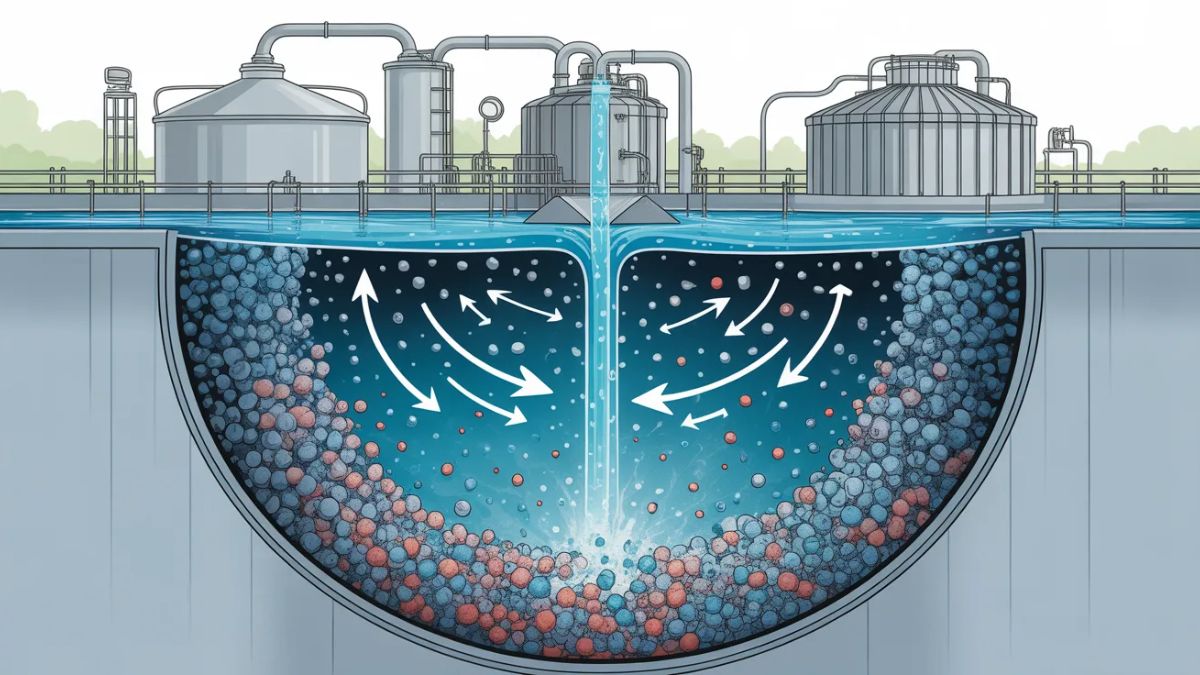
Built on advanced science, magsorption water treatment micro-magsorption offers a smarter, faster, and more efficient way to remove contaminants from water. Water pollution is becoming one of the most serious global challenges, and traditional purification methods are often not enough to meet modern demands. This is where magsorption water treatment comes into play. It is gaining attention for its ability to deliver high-quality results with lower environmental impact. In this article, we explore how magsorption works, why it matters, and how it is shaping the future of water purification.
What Is Magsorption Water Treatment?
Magsorption water treatment is a modern purification technique that uses magnetic adsorption to remove pollutants from water. It combines the principles of adsorption and magnetism to attract and separate harmful particles such as heavy metals, organic compounds, and microorganisms. Unlike traditional filtration methods, it works at a microscopic level, making it highly efficient.
This process involves specially designed magnetic materials that bind with contaminants. Once attached, these particles can be easily removed using magnetic separation. This not only speeds up the treatment process but also reduces the need for complex filtration systems. As a result, magsorption offers a cleaner and more sustainable approach to water purification.
Understanding Micro-Magsorption Technology
Micro-magsorption is the core innovation behind magsorption water treatment. It refers to the use of microscopic magnetic particles that have a high surface area and strong adsorption capacity. These particles are engineered to target specific pollutants, making the process highly precise and effective.
The technology works by dispersing micro-magnetic particles into contaminated water. These particles quickly attach to impurities and form clusters. Once the contaminants are bound, a magnetic field is applied to separate them from the water. This ensures that even the smallest pollutants are removed efficiently. The result is cleaner water with minimal waste.
How Magsorption Differs from Traditional Methods
Traditional water treatment methods such as filtration, chemical treatment, and sedimentation have been widely used for decades. While they are effective to some extent, they often struggle with removing micro-level contaminants. Magsorption, on the other hand, targets pollutants at a molecular level.
Another key difference is efficiency. Magsorption works faster and requires less energy compared to conventional systems. It also produces fewer by-products, making it environmentally friendly. Additionally, the reusable nature of magnetic materials reduces operational costs, which is a major advantage for large-scale applications.
Key Benefits of Magsorption Water Treatment
One of the biggest advantages of magsorption water treatment is its high efficiency. It can remove a wide range of contaminants, including heavy metals, dyes, and pathogens, in a single step. This makes it a versatile solution for different types of water sources.
Another important benefit is sustainability. The process uses reusable magnetic particles, which reduces waste and lowers costs. It also requires less chemical usage, minimizing environmental impact. Furthermore, its scalability allows it to be used in both small and large systems, from household filters to industrial plants.
Applications in Industrial Water Treatment
Industries generate large volumes of wastewater that often contain harmful substances. Magsorption technology provides an effective solution for treating this water before it is released into the environment. It is particularly useful in industries such as textile, mining, and pharmaceuticals.
In these sectors, magsorption can remove toxic metals and complex organic compounds that are difficult to treat using conventional methods. This helps companies meet environmental regulations and reduce their ecological footprint. It also improves water recycling, allowing industries to reuse treated water and save resources.
Role in Drinking Water Purification
Access to safe drinking water is essential for human health. Magsorption water treatment offers a reliable way to ensure water quality by removing harmful contaminants. It can effectively eliminate bacteria, viruses, and chemical pollutants that pose health risks.
This technology is especially useful in areas where water sources are heavily contaminated. Its ability to work at a micro level ensures that even trace pollutants are removed. As a result, it provides cleaner and safer drinking water, contributing to better public health outcomes.
Environmental Impact and Sustainability
One of the key reasons magsorption technology is gaining popularity is its eco-friendly nature. Unlike traditional methods that rely heavily on chemicals, magsorption uses magnetic particles that can be reused multiple times. This reduces waste and lowers environmental impact.
The process also consumes less energy, making it more sustainable in the long run. By minimizing the use of harmful chemicals, it prevents secondary pollution. This makes magsorption an ideal choice for environmentally conscious water treatment solutions.
Challenges and Limitations
Despite its many advantages, magsorption water treatment is not without challenges. One of the main limitations is the cost of developing and producing magnetic materials. While they are reusable, the initial investment can be high.
Another challenge is the need for specialized equipment to generate magnetic fields and handle the separation process. This can make implementation more complex compared to traditional systems. However, ongoing research and technological advancements are expected to address these issues in the future.
Future of Micro-Magsorption Technology
The future of micro-magsorption technology looks promising as researchers continue to improve its efficiency and affordability. Innovations in nanotechnology are helping to create more effective magnetic particles with higher adsorption capacity.
There is also growing interest in integrating magsorption with other advanced treatment methods to create hybrid systems. These systems can provide even better results and handle a wider range of contaminants. As technology evolves, magsorption is expected to play a major role in global water treatment solutions.
Why Magsorption Is Gaining Global Attention
Magsorption water treatment is gaining global recognition due to its efficiency, sustainability, and versatility. Governments and organizations are exploring its potential to address water scarcity and pollution challenges. Its ability to provide high-quality results with minimal environmental impact makes it an attractive option.
As awareness about water conservation grows, more industries and communities are adopting advanced technologies like magsorption. This shift reflects a broader trend towards sustainable solutions that balance efficiency with environmental responsibility.
Conclusion
Magsorption water treatment and micro-magsorption technology represent a significant step forward in the field of water purification. By combining advanced science with practical applications, they offer a powerful solution to modern water challenges. From industrial wastewater treatment to safe drinking water, this technology has the potential to transform how we manage water resources.
While there are still challenges to overcome, ongoing research and innovation are paving the way for wider adoption. As the demand for clean water continues to rise, magsorption stands out as a reliable, efficient, and sustainable solution for the future.
FAQs
What is magsorption water treatment?
Magsorption water treatment is a purification method that uses magnetic particles to remove contaminants from water efficiently.
How does micro-magsorption work?
It works by using tiny magnetic particles that attach to pollutants and are then removed using a magnetic field.
Is magsorption better than traditional filtration?
Yes, it is more effective at removing microscopic contaminants and often works faster with less environmental impact.
Can magsorption be used for drinking water?
Yes, it is highly effective in purifying drinking water by removing bacteria, viruses, and harmful chemicals.
Is magsorption environmentally friendly?
Yes, it uses reusable materials and requires fewer chemicals, making it a sustainable water treatment option.