
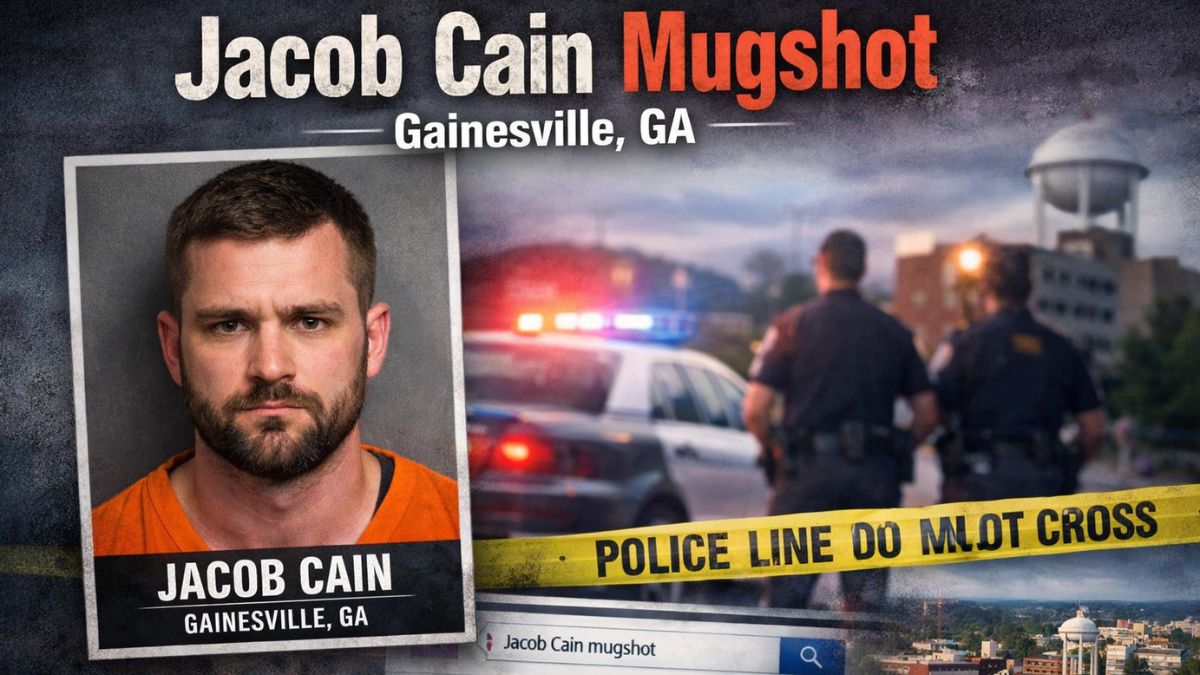
In today’s digital world, a single image can spread across the internet within minutes. Mugshots, in particular, often attract public attention because they are linked to legal situations and criminal records. One such case that has generated curiosity online is the Jacob Cain mugshot Gainesville GA search trend. Many people want to know who Jacob Cain is, what happened in Gainesville, Georgia, and why the mugshot has been circulating online.
Understanding the context behind mugshots is important. These images are usually part of the public record created during the arrest process. However, they rarely tell the whole story. In this article, we explore the available information, discuss how mugshots become public, and examine the broader legal and social issues connected with cases like the Jacob Cain mugshot in Gainesville, GA.
Understanding Mugshots and Public Records
A mugshot is a photograph taken by law enforcement when a person is arrested and booked into jail. The image typically includes a front-facing and profile view and becomes part of official arrest documentation. In many jurisdictions across the United States, mugshots are considered public records, meaning they may be accessible to the public through government databases or legal requests.
When people search for Jacob Cain mugshot Gainesville GA, they are usually trying to understand the circumstances surrounding an arrest. However, it is important to remember that an arrest does not automatically mean guilt. The legal system follows the principle of presumption of innocence, meaning a person is considered innocent until proven guilty in court.
Because mugshots are often published online, they can quickly spread beyond their original context. This can lead to misunderstandings or incomplete narratives about the people involved. As a result, many experts suggest looking at verified information rather than relying only on images circulating on the internet.
The Gainesville, Georgia Context
Gainesville, Georgia, is a city located in Hall County in the northeastern part of the state. Known for its strong community ties and growing economy, Gainesville has become a regional hub for business, education, and culture. Like any city, however, it also experiences routine law enforcement activity, including arrests and booking procedures.
When searches such as Jacob Cain mugshot Gainesville GA appear online, they often relate to records maintained by local law enforcement agencies. These records may include arrest details, booking information, and mugshots that become accessible through public record systems.
Local police departments and county sheriff’s offices are responsible for maintaining these records. In Hall County, arrest data may be released through official channels or public reporting services. However, the presence of a mugshot online does not always reflect the outcome of a case or the full story behind it.
Why Mugshots Go Viral Online
The internet has dramatically changed how information spreads. Mugshots that were once stored in physical records are now frequently uploaded to websites and searchable databases. This makes them easier to access but also easier to misunderstand.
Search phrases such as Jacob Cain mugshot Gainesville GA often trend because people are curious about local incidents or stories shared on social media. Sometimes a mugshot becomes popular simply because it appears unusual, controversial, or linked to a rumor circulating online.
Another factor is the rise of websites dedicated to publishing arrest records. These platforms gather publicly available information and display it in a searchable format. While they operate within legal boundaries in many cases, they also raise ethical questions about privacy, reputation, and the long-term impact of online records.
Legal Rights and Presumption of Innocence
One of the most important aspects to understand about any mugshot is that it represents a moment in the legal process, not a final judgment. The criminal justice system is designed to evaluate evidence through courts, legal representation, and due process.
In the case connected to the Jacob Cain mugshot Gainesville GA searches, the same principle applies. An arrest simply means that law enforcement believed there was probable cause to detain an individual. What happens afterward depends on investigations, court proceedings, and legal outcomes.
Legal experts often emphasize that publishing mugshots without context can create reputational harm. Many individuals whose images appear online may later have charges dropped, reduced, or dismissed. Despite that, the mugshot may remain visible on the internet for years, which can affect employment opportunities and personal relationships.
How Online Searches Shape Public Perception
When someone’s name becomes associated with a mugshot online, public perception can change rapidly. Search engines often highlight images or headlines without providing complete background information. As a result, people who encounter the name Jacob Cain mugshot Gainesville GA might form assumptions before understanding the full situation.
This phenomenon reflects a broader issue in the digital age. Online information moves quickly, but accurate context sometimes moves slowly. Articles, reports, or discussions that appear later may provide more balanced explanations, yet the initial impression created by a mugshot can remain strong.
For this reason, responsible reporting encourages readers to seek credible sources and verified facts. Context matters when evaluating any legal situation, especially when images alone do not explain the details behind an arrest.
The Role of Local Media and Community Awareness
Local news outlets and community discussions often play a role in how incidents become widely known. In smaller cities like Gainesville, information about arrests or investigations may circulate through local media, social networks, and word-of-mouth conversations.
If the Jacob Cain mugshot Gainesville GA topic gained attention online, it may have been amplified through these channels. Community members frequently search for information to understand what happened, whether it affects local safety, or whether it involves someone they know.
Responsible journalism typically focuses on verified facts and avoids speculation. By providing clear explanations of events and legal processes, media organizations can help readers understand the difference between an arrest record and a confirmed criminal conviction.
The Long-Term Impact of Online Mugshots
For individuals whose mugshots appear online, the effects can last long after the original incident. Even when legal matters are resolved, images can remain on search engines, creating a lasting digital footprint.
This issue has led to debates about online reputation management, privacy rights, and the ethics of publishing arrest records. Some states have introduced laws that limit how mugshots can be used commercially or require removal after certain legal outcomes.
In the context of searches like Jacob Cain mugshot Gainesville GA, it highlights a larger conversation about balancing public transparency with personal privacy. Public records serve an important role in accountability, but they can also create unintended consequences when widely shared online.
Responsible Research and Information Sharing
When people encounter a mugshot online, the best approach is to seek reliable sources and understand the legal framework behind it. Government websites, official court records, and reputable news organizations typically provide the most accurate information.
Relying only on viral posts or unverified websites can lead to misinformation. Searches related to Jacob Cain mugshot Gainesville GA should therefore be approached carefully, focusing on facts rather than assumptions or speculation.
Educating the public about how the justice system works can also reduce confusion. Arrests, charges, hearings, and verdicts all represent different stages of a legal process. Understanding these stages helps readers interpret online information more responsibly.
Conclusion
The interest surrounding Jacob Cain mugshot Gainesville GA reflects how quickly arrest records and images can capture public attention in the digital age. While mugshots are part of legitimate law enforcement documentation, they often represent only one moment in a complex legal process.
It is important to remember that an arrest does not equal a conviction. Legal systems rely on evidence, due process, and fair hearings before determining responsibility. Online audiences should therefore approach mugshot searches with caution and seek verified information before drawing conclusions.
By focusing on accurate reporting and responsible information sharing, communities can maintain transparency while also respecting individual rights. Understanding the broader context behind mugshots ultimately leads to a more informed and balanced perspective.
FAQs
What is the Jacob Cain mugshot Gainesville GA search about?
It refers to online searches related to a mugshot associated with an arrest record in Gainesville, Georgia.
Are mugshots considered public records in Georgia?
Yes, mugshots taken during the arrest process are often part of public records maintained by law enforcement agencies.
Does a mugshot mean someone is guilty?
No. A mugshot only shows that a person was arrested. Guilt or innocence is determined by a court of law.
Why do mugshots spread quickly online?
They spread because arrest records are public and many websites publish them, making them easy to share on social media.
Can mugshots be removed from the internet?
In some cases, removal may be possible through legal requests, reputation management services, or state regulations.