Pathfinder 2e (PF2) is a game celebrated for its depth, strategy, and the freedom it offers players to craft epic adventures. One essential aspect that often goes unnoticed is travel speed, which dictates how quickly characters traverse the world. Understanding PF2 travel speed is vital not only for efficient exploration but also for tactical decisions in encounters and long journeys. This guide breaks down all aspects of travel speed, modifiers, and tips to optimize movement in your campaigns.
What Is PF2 Travel Speed?
In Pathfinder 2e, travel speed represents the base distance a character can move in a single action or round. This value is primarily determined by a character’s race, class, and sometimes equipment. For example, a halfling might have a base speed of 25 feet, while a human often has 30 feet. Travel speed is critical for navigating the battlefield, exploring dungeons, or covering large distances on overland journeys. Unlike other role-playing games, PF2 emphasizes both tactical movement during combat and strategic travel during downtime or exploration segments.
Base Speed by Race and Class
Each race in PF2 comes with a predetermined base movement speed. Humans, elves, and gnomes generally start with a speed of 25 to 30 feet, while larger races such as dwarves may move slightly slower due to their build. Classes can also modify movement indirectly. Rogues and monks, for instance, often gain abilities or feats that increase their movement temporarily or permanently, giving them an edge in exploration and combat scenarios. Knowing your base speed helps plan your journey and ensures that your group can travel cohesively without leaving slower characters behind.
Modifiers That Affect Travel Speed
PF2 travel speed is rarely static. Various modifiers can increase or decrease a character’s movement. Armor penalties, terrain types, and magical effects all play a role. Heavy armor may reduce movement, while spells like haste or class features from monks can temporarily boost it. Environmental conditions, such as muddy roads, dense forests, or icy surfaces, may also slow characters down. Understanding these modifiers ensures your party can calculate travel times accurately and avoid unexpected delays.
Overland Travel: Calculating Distance
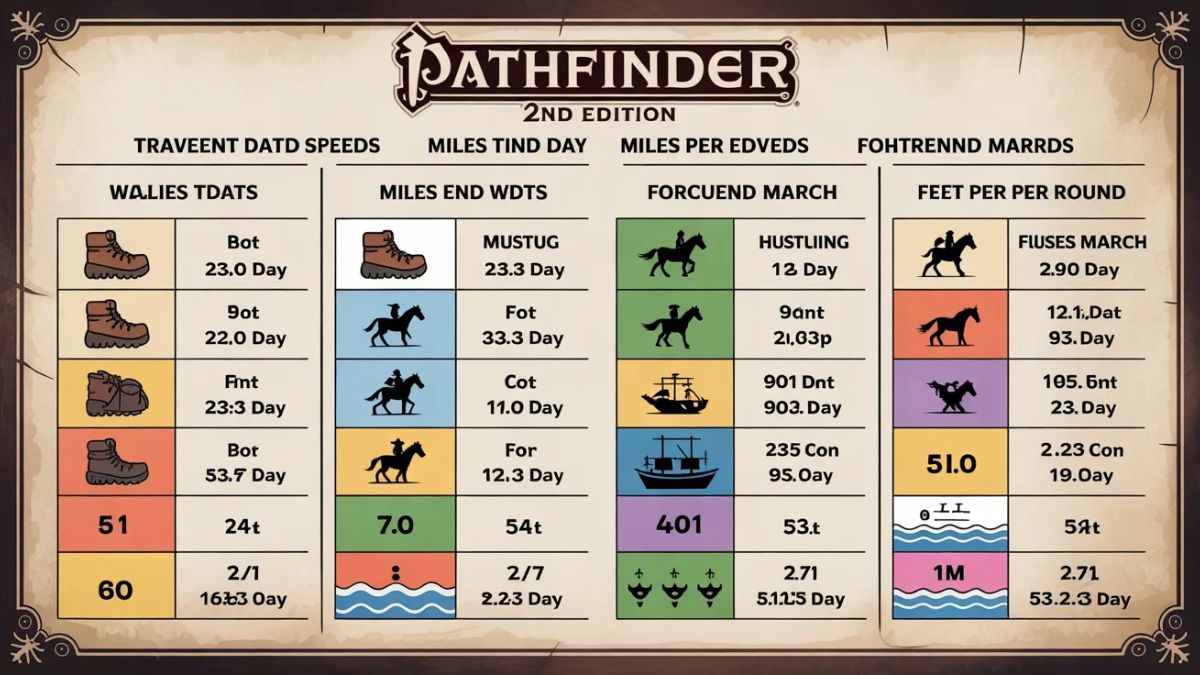
When adventuring across vast landscapes, knowing overland travel rules is crucial. PF2 defines travel in terms of speed per hour and per day, factoring in terrain difficulty, rest breaks, and encumbrance. A party moving at a standard speed might cover 24 miles in a day under optimal conditions, but rough terrain or inclement weather could reduce this significantly. Tracking travel speed in overland scenarios allows game masters and players to plan supply needs, rest stops, and encounter pacing effectively.
Tactical Movement in Combat
While PF2 travel speed is essential for exploration, it becomes even more critical in combat situations. Each character’s movement speed determines how far they can advance toward enemies, retreat, or reposition for optimal attack angles. Certain feats and class abilities allow characters to extend their movement, such as taking the Stride action multiple times or using special movement powers. Understanding the interplay between base speed and tactical movement can turn the tide of combat in your favor.
Equipment and Its Impact on Movement
A character’s gear directly influences travel speed. Heavy weapons, armor, or over-encumbered backpacks can slow down movement, reducing tactical flexibility and long-distance travel efficiency. Light armor or magical enhancements, on the other hand, can maintain or even increase speed. Players should weigh the advantages of heavy protection against the disadvantage of slower movement, particularly during exploration-heavy campaigns or time-sensitive missions.
Feats That Boost Speed
PF2 offers numerous feats and abilities designed to enhance travel speed. Racial feats, such as Elf’s Fleet or Human’s Fleet-Footed, provide incremental bonuses. Class-specific feats, like the Monk’s Step Up or Rogue’s Quick Reflexes, allow more dynamic movement. These enhancements can prove invaluable for scenarios requiring rapid positioning, escaping danger, or closing gaps on ranged enemies. Selecting feats with movement benefits is a strategic way to maximize both exploration efficiency and combat effectiveness.
Environmental Factors and Terrain
Travel speed is never constant outside controlled environments. Environmental factors like snow, sand, rivers, or uneven terrain significantly influence how far a party can travel in a given time. PF2 rules categorize terrain into simple, difficult, and hazardous, with movement costs increasing accordingly. Navigating these challenges requires careful planning and may involve alternative strategies, such as using mounts, magical transportation, or tactical rest periods to avoid exhaustion.
Mounts and Vehicles
One of the easiest ways to increase travel speed in PF2 is by using mounts or vehicles. Horses, camels, or magical steeds allow characters to cover much greater distances than on foot. Vehicles like wagons or boats further enhance travel efficiency for entire parties. However, using mounts introduces considerations such as terrain suitability, feeding requirements, and combat vulnerability. Planning travel with these assets ensures faster and safer journeys, making them invaluable tools for adventuring groups.
Magic and Travel Speed Enhancements
Spells and magical items are game-changers for travel speed. Buffs like Haste, Longstrider, or teleportation spells can drastically reduce travel time, whether in combat or overland exploration. Magical boots, cloaks, or other equipment may also provide permanent or situational speed bonuses. Incorporating magic strategically not only optimizes movement but also opens up tactical opportunities, enabling creative solutions for travel challenges.
Encumbrance and Its Effects
PF2 emphasizes realistic movement mechanics, including encumbrance penalties. Carrying too much weight slows down characters, reduces stamina, and may affect combat mobility. Monitoring the party’s inventory ensures that speed is maintained, particularly during long journeys. Lightening the load or distributing items strategically among party members can mitigate these penalties, allowing consistent travel speed without compromising preparedness or combat readiness.
Strategies to Optimize Travel Speed
Efficient use of PF2 travel speed requires foresight and planning. Choosing races, classes, and feats that complement movement needs, equipping gear wisely, and considering environmental conditions all contribute to optimal travel efficiency. Collaboration within the party to maintain pace, leverage mounts, and plan for terrain obstacles ensures that journeys are completed faster, safer, and more predictably. Effective speed management enhances both role-play immersion and tactical gameplay.
Common Mistakes to Avoid
Many players underestimate the complexity of PF2 travel speed. Mistakes such as ignoring terrain modifiers, overburdening characters, or miscalculating travel times can lead to exhaustion, delayed missions, or tactical disadvantages in combat. It is important to review base speeds, adjust for modifiers, and plan contingencies for difficult terrain or unexpected encounters. By avoiding these pitfalls, players maintain efficiency and ensure smooth gameplay.
Conclusion
PF2 travel speed is more than a simple number; it is a core mechanic that influences exploration, combat, and strategic planning. From understanding base speeds to accounting for modifiers, environmental factors, equipment, and magical enhancements, mastering travel speed allows players to maximize efficiency and enjoy richer gameplay. By planning wisely, utilizing feats and magic, and managing encumbrance, adventurers can navigate the world of Pathfinder 2e confidently and effectively.
FAQs
What is the base travel speed in PF2?
Base travel speed varies by race and typically ranges from 25 to 30 feet for most characters.
How do armor and equipment affect travel speed?
Heavy armor and over-encumbered gear reduce movement, while light armor and speed-enhancing items can maintain or boost it.
Can magic increase travel speed in PF2?
Yes, spells like Haste or Longstrider and magical items can temporarily or permanently enhance movement speed.
How does terrain influence PF2 travel speed?
Difficult or hazardous terrain increases movement costs, slowing down characters based on PF2’s overland and combat rules.
Are mounts effective for improving travel speed?
Absolutely. Mounts and vehicles allow parties to cover greater distances quickly but require planning for terrain and care needs.