
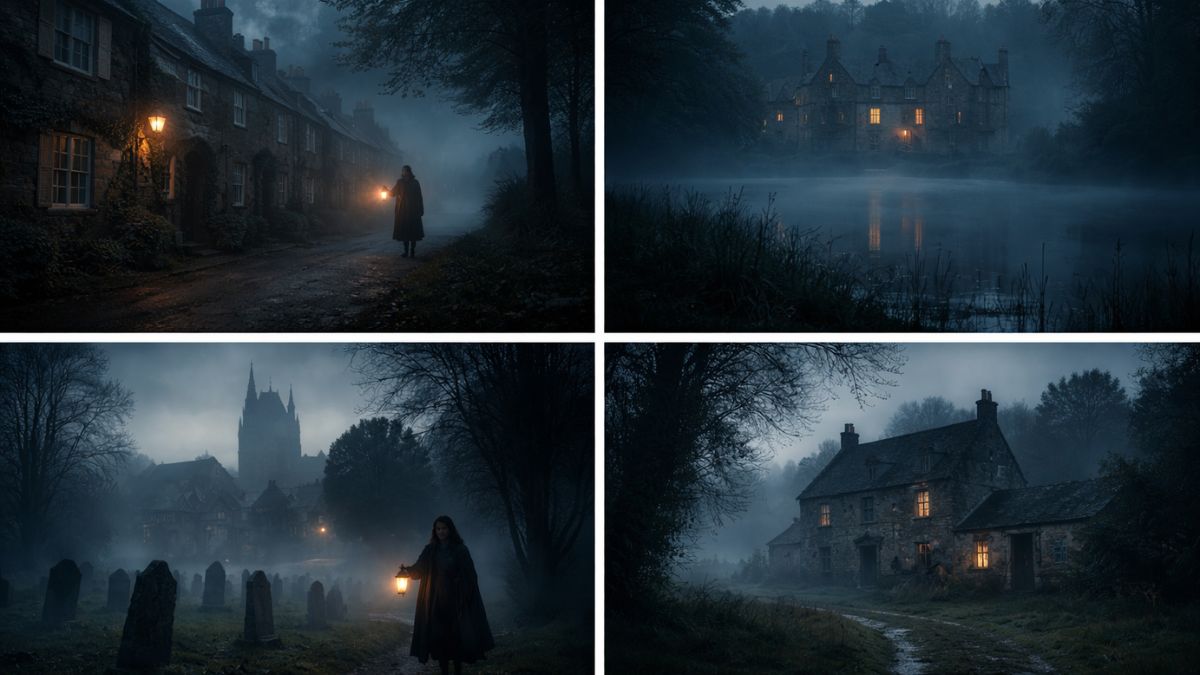
The Cotswolds is famous for honey-colored cottages, rolling hills, and peaceful English villages. At first glance, it seems like the last place you would expect fear to unfold. Yet filmmakers have long understood that beauty can hide darkness. The quiet lanes, ancient churches, and misty countryside create a haunting contrast that works perfectly for suspense. When horror or thriller movies filmed in the Cotswolds use this setting, they turn calm landscapes into something deeply unsettling.
Why the Cotswolds Is Perfect for Horror and Thriller Films
The Cotswolds offers a unique mix of charm and isolation, which is a powerful combination in psychological thrillers. Narrow country roads, centuries-old stone houses, and vast open fields create natural tension. In suspense cinema, isolation often heightens fear, and this region delivers that atmosphere effortlessly.
Filmmakers also appreciate the authentic period architecture found in villages like Broadway and Stow-on-the-Wold. These locations add realism to stories involving secrets, hidden pasts, or mysterious disappearances. The peaceful rural setting allows tension to build slowly, which is essential in atmospheric horror films. Instead of loud jump scares, the environment itself becomes part of the suspense.
The Woman in Black (2012)
One of the most notable gothic horror films connected to the area is The Woman in Black. While filming took place across several UK locations, parts of the countryside scenes reflect the haunting rural aesthetic similar to the Cotswolds. The story follows a young lawyer who encounters a vengeful spirit in a remote village.
The isolated marshlands and old-world architecture mirror the eerie beauty often found in Cotswold villages. The contrast between picturesque scenery and supernatural terror intensifies the film’s impact. This style of storytelling shows how traditional English landscapes can transform into chilling backdrops for ghost stories.
The Wicker Man (1973)
The cult classic The Wicker Man captures rural Britain’s unsettling side, even though filming was largely done elsewhere. Its themes of isolation, pagan rituals, and quiet communities hiding dark secrets reflect the tone many thriller productions seek when using countryside settings like the Cotswolds.
The film demonstrates how serene farmland and close-knit villages can create psychological discomfort. The fear comes not from monsters but from atmosphere and community tension. This same rural suspense style often appears in thriller movies inspired by the Cotswolds’ timeless charm.
Wolf Hall (2015 TV Adaptation)
Although primarily a historical drama, Wolf Hall used several Cotswold locations to recreate Tudor England. Its darker political themes and shadow-filled interiors show how the region’s architecture can support tense storytelling. Ancient manor houses and stone churches add depth to scenes filled with suspicion and intrigue.
The muted countryside colors enhance the dramatic mood, especially in scenes involving betrayal and power struggles. While not pure horror, the series highlights how easily the Cotswolds can support suspense-driven narratives. The visual tone proves that beauty and danger can coexist on screen.
Psychological Thrillers and Indie Horror Projects
Beyond well-known productions, the Cotswolds has attracted independent filmmakers who favor psychological horror and crime thrillers. Smaller productions often use remote farmhouses, wooded paths, and foggy hills to create tension without heavy special effects. These films rely on atmosphere, slow pacing, and character-driven suspense.
The region’s natural light and changing seasons also help directors craft mood shifts. A sunny meadow can feel inviting in one scene and unsettling in the next. This flexibility makes horror or thriller movies filmed in the Cotswolds stand out for their emotional depth and visual storytelling.
The Role of Landscape in Building Fear
Landscape plays a powerful role in modern horror cinema, and the Cotswolds demonstrates this beautifully. Wide open spaces can feel just as claustrophobic as dark corridors when framed correctly. Silence becomes louder, and distance creates vulnerability.
In many thriller narratives, the countryside setting isolates characters from help, heightening suspense. Stone walls, winding roads, and hidden valleys add unpredictability to the plot. Instead of relying solely on dramatic music or sudden scares, filmmakers let the natural environment build unease gradually.
Conclusion
Horror or thriller movies filmed in the Cotswolds prove that fear does not need urban chaos or abandoned asylums to feel real. Sometimes, the quietest villages hide the darkest secrets. The region’s historic charm, rural isolation, and atmospheric beauty make it a powerful backdrop for suspenseful storytelling.
From gothic ghost stories to psychological thrillers, the Cotswolds continues to inspire filmmakers who understand that true horror often lies beneath the surface of something beautiful. When rolling hills meet hidden danger, the result is unforgettable cinematic tension.
FAQs
What makes the Cotswolds suitable for horror movies?
Its isolated countryside, historic architecture, and quiet villages naturally create suspense and atmospheric tension.
Are many horror films actually shot in the Cotswolds?
While not as common as urban settings, several productions use the region or similar rural landscapes for suspense scenes.
Is The Woman in Black connected to the Cotswolds?
Parts of its countryside aesthetic reflect the same gothic rural style found in Cotswold villages.
Do thrillers benefit from rural filming locations?
Yes, rural settings increase isolation and psychological tension, which are key elements in thrillers.
Can the Cotswolds work for psychological horror?
Absolutely. Its peaceful appearance contrasts strongly with dark themes, making psychological horror more impactful.